0–9 Morse guide

Morse Code Numbers Made Easy

Morse digits follow a clean pattern, which makes them one of the easiest parts of the code system to memorize. This page breaks down the number chart, shows how the pattern changes from 1 through 0, and gives quick examples you can practice right away.

Close-up image representing Morse code numbers

How Morse numbers are structured

Every number uses five total signals. Digits 1 through 5 begin with dots and add one more dot each time. Digits 6 through 0 flip the pattern and begin with dashes. Because of that symmetry, the number system is much easier to remember than it first appears.

  • 1 = one dot, then four dashes
  • 5 = five dots
  • 6 = one dash, then four dots
  • 0 = five dashes

Why numbers matter in Morse

Numeric codes are useful for times, dates, coordinates, radio identifiers, and short reference values. Whether someone is learning for fun or brushing up on emergency-style communication, knowing the digit patterns makes real messages much more practical.

Once you know the rhythm of 0–9, long strings like years, phone numbers, and street numbers become much easier to break apart and decode correctly.

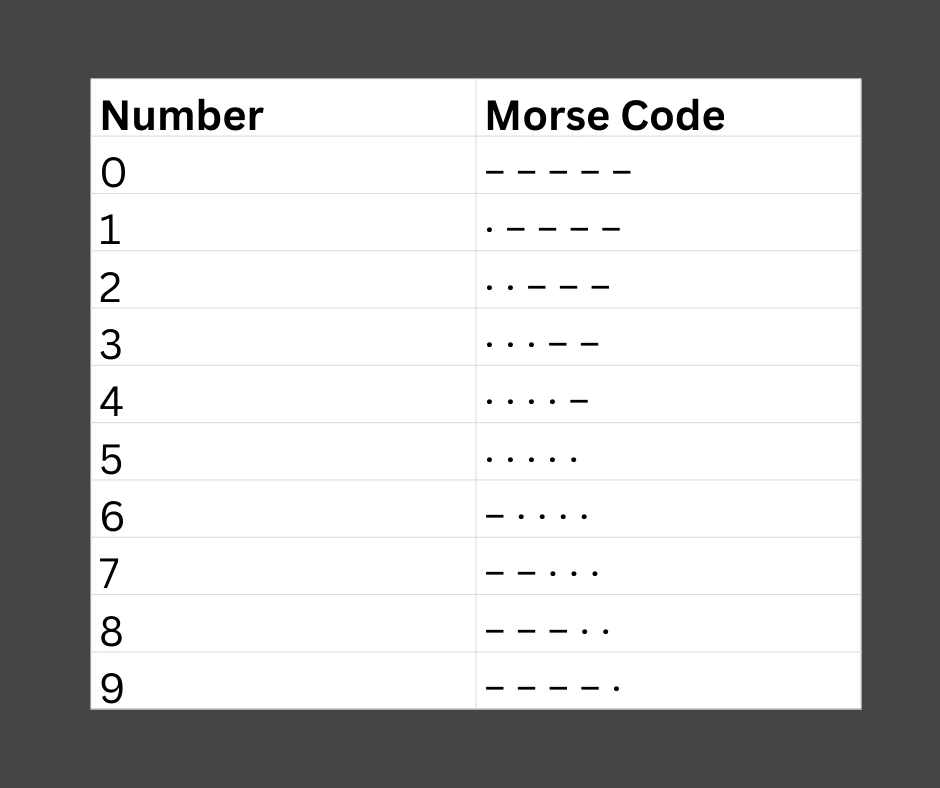
Morse code numbers chart

Use this 0–9 table as a quick lookup while you practice sending or reading numeric sequences.

NumberMorsePattern note
1.----1 dot + 4 dashes
2..---2 dots + 3 dashes
3...--3 dots + 2 dashes
4....-4 dots + 1 dash
5.....5 dots
6-....1 dash + 4 dots
7--...2 dashes + 3 dots
8---..3 dashes + 2 dots
9----.4 dashes + 1 dot
0-----5 dashes
Chart listing Morse code numbers from 0 to 9

Simple memory rule for digits

1–5

Think “building dots.” The dot count increases from left to right until you hit five dots in a row.

6–0

Then the pattern flips and starts building dashes instead, which makes the second half easy to predict.

5 units

Every digit has five signals total, so if you count fewer or more, you may be looking at a letter instead.

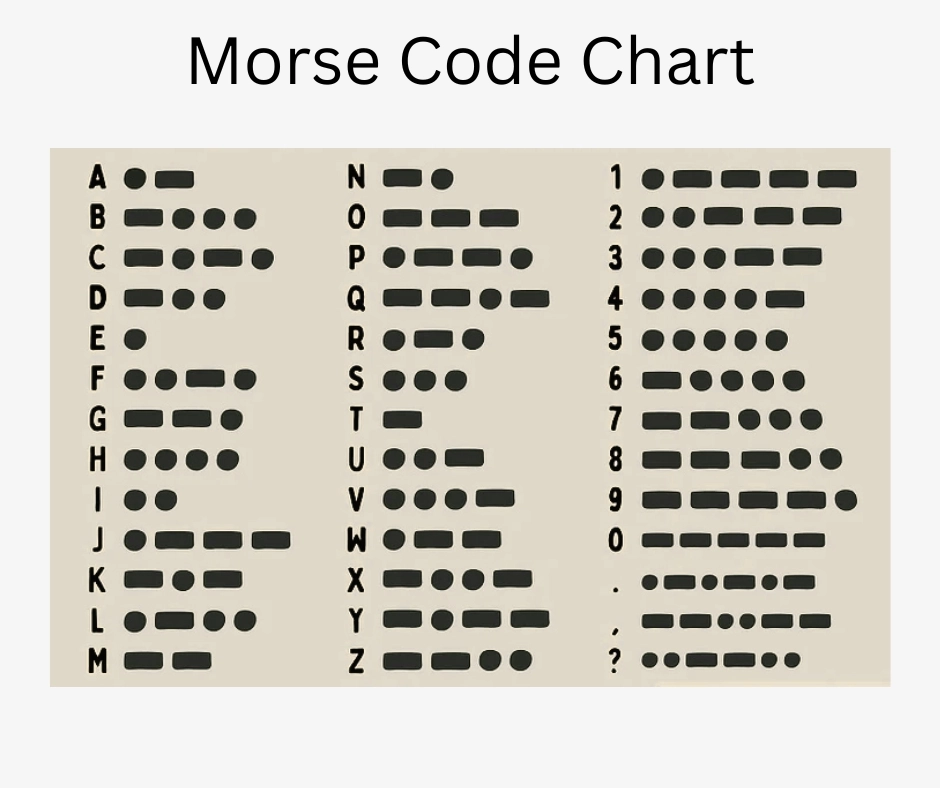
Large Morse chart including letters and numbers
The shared chart is useful when you want to compare number patterns with the alphabet on one visual reference.

Practice examples

NumberMorse code
123.---- ..--- ...--
507..... ----- --...
911----. .---- .----
2025..--- ----- ..--- .....

Best way to get faster

Read each digit as its own five-part unit instead of trying to decode a long string all at once. Pause between digits, then verify your answer in the translator. That approach builds speed without creating sloppy habits.

Another good drill is converting the current year, your house number, or a short phone extension into Morse until the patterns begin to feel automatic.

Try your own number sequences

Switch back to the translator and test years, dates, coordinates, or any custom digits you want to hear and save.

Go to Translator