Samuel Morse Biography: Artist, Inventor, and Telegraph Pioneer
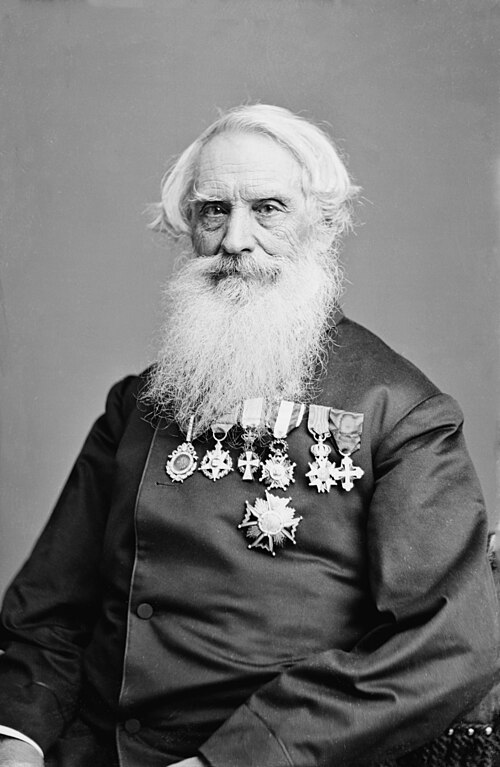
Samuel Finley Breese Morse (April 27, 1791-April 2, 1872) was an American painter and inventor. He first became known as an artist, then became famous around the world for helping create the electric telegraph system and Morse code.
Early life and education
Samuel Morse was born in Charlestown, Massachusetts. His father was a minister and writer, and his mother encouraged his education. Morse attended Phillips Academy and later Yale College, where he studied subjects like electricity in science lectures. At that time, electricity was still a new idea, so these lessons stayed with him for years.
His art career before the telegraph
Before he worked on communication technology, Morse built a serious career as a portrait painter. He studied art in England and painted people such as leaders, judges, and other public figures. In New York, he helped start the National Academy of Design in 1825 and later served as its president. This part of his life matters because it shows he was already successful before his inventions.
The communication problem he wanted to solve
In the early 1800s, messages moved slowly by horse, ship, or train. News between cities could take days. Morse became interested in using electrical signals to send messages quickly over wires. The goal was simple but powerful: send information in minutes instead of days.
Working with Alfred Vail and developing Morse code
Morse did not work alone. He collaborated with Alfred Vail, a skilled machinist and inventor who helped improve the telegraph equipment. Together, they refined a practical signaling method that used short and long marks (dots and dashes) to stand for letters and numbers. Their work turned the telegraph from an idea into a system people could actually use.
The 1844 milestone message
After Congress funded a telegraph line between Washington, D.C., and Baltimore in 1843, Morse demonstrated the system publicly. On May 24, 1844, he sent the famous message, “What hath God wrought,” from Washington to Baltimore. This successful test proved that long-distance electrical communication worked.
How telegraphy changed society
The telegraph and Morse code changed daily life in major ways. Newspapers got breaking news faster. Railroads used telegraph signals to improve scheduling and safety. Businesses could coordinate prices and deliveries across long distances. Families and government offices could share urgent information much more quickly than before.
Legacy and historical impact
Samuel Morse is remembered for both art and technology, but his communication work had the widest long-term impact. Telegraph networks spread across the United States and other countries, creating an early global communication system. Later inventions like the telephone, radio, and internet are different technologies, but they all follow the same big idea Morse helped prove: fast long-distance communication can change society.
To explore the code system linked to Morse's legacy, use the letters chart, the numbers chart, and practice in the Morse translator.